The Sustainable Land and Water Resources Research Experience for Undergraduates (SLAWR REU) is a summer program that explores the interactions between physical, natural, and social processes through the weaving of Indigenous knowledge with Western knowledge to advance scientific understanding and support management decisions made by tribal governments.
With a focus on community-based participatory research and interdisciplinary research teams, students learn the key elements of land and water resources that are essential to improving management practices.
Three Research Sites – One Research Community
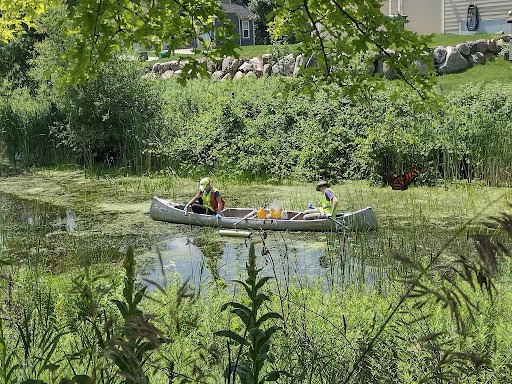
Students are divided into three teams hosted on Native American reservations and at the University of Minnesota. Research projects integrate Earth-surface dynamics, geology, hydrology, and other disciplines and are developed in collaboration with tribal governments.
Learn more about the different research teams:
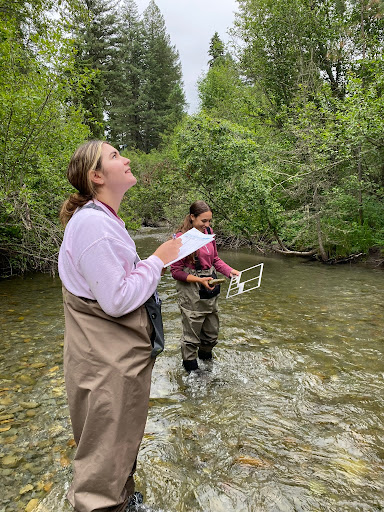
- Team SPAW (Salish and Pend D’Oreille Aboriginal Watershed) is located in Montana on the Flathead Indian Reservation
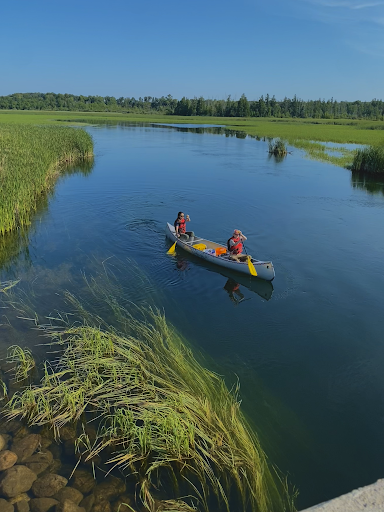
- Team Zaaga’igan is located in Duluth, Minnesota, and conducts research in collaboration with the Fond du Lac Band of Lake Superior Chippewa
- Team Big River is Headquartered at the University of Minnesota, Twin Cities, with research locations at the Polar Geospatial Center and the St. Anthony Falls Lab
Program Overview
SLAWR REU is a 10-week program.
Week 1: Remote work on your own
Participants will work remotely, doing online tutorials, creating a basic ArcGIS StoryMap, and meeting on Zoom with REU mentors and participants.
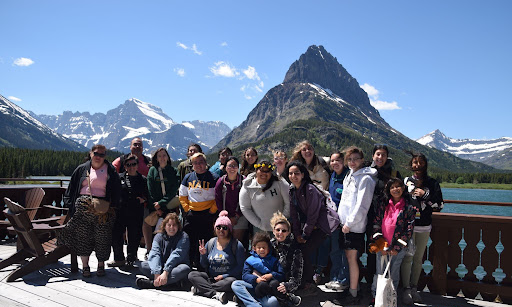
Week 2: Welcome Week in Glacier National Park
Participants begin the in-person portion of the program with Welcome Week at Glacier National Park in Montana, which includes intensive team-building activities and introduction to core program elements of community-based participatory research and research ethics.
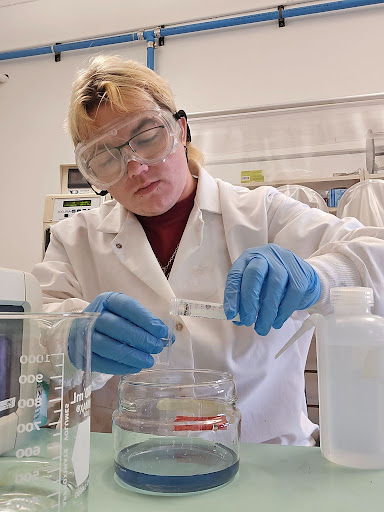

Weeks 3-9: Research Sites
After Welcome Week, participants begin work at their research sites but share research progress with the wider group through weekly virtual and/or in-person team meetings. With guidance from their mentors, participants complete a research project and summarize their research through a StoryMap and a poster. The majority of REU projects will inherently support tribal governments, and results will be shared with partners and community members as well as the broader scientific community.


Week 10: All-Team Gathering and Research Symposium in the Twin Cities
At the end of the REU, participants and mentors attend an All-Team Gathering and Research Symposium in the Twin Cities. Participants are also encouraged to share their research at a scientific conference, with funding provided by the REU.
Eligibility
You must be a U.S. citizen or permanent resident to apply for this program. The program is open to undergraduate students majoring in civil engineering, geosciences, ecology, mathematics, social sciences, or related fields.
Student Support
Stipends
Participants receive a $7000 stipend.
Housing and Food
Participants will have the option to live in dormitories at Salish Kootenai College; the University of Minnesota, Twin Cities; or the University of Minnesota, Duluth and will receive a student meal plan or access to cooking facilities and a food stipend.
Transportation
The program covers costs for travel to Welcome Week, research sites, the All-Team Gathering, and the return home. Cars and bikes are not provided; any parking costs are considered a personal expense.
Research Expenses
All research expenses are covered by the REU.
Conference
All students are encouraged to share their research at a professional conference. The REU provides travel and registration expenses up to $1000 per participant to support this activity.
Funding
 SLAWR REU is a partnership between Salish Kootenai College and the University of Minnesota’s Institute on the Environment, Polar Geospatial Center, Minneapolis-St. Paul Metropolitan Area Long Term Ecological Research program, and St. Anthony Falls Laboratory. SLAWR REU is supported by NSF EAR-2349269 (SLAWR REU) and NSF DEB-2045382 (MSP LTER) as well as the Alfred P. Sloan Foundation.
 REU on Sustainable Land and Water Resources